
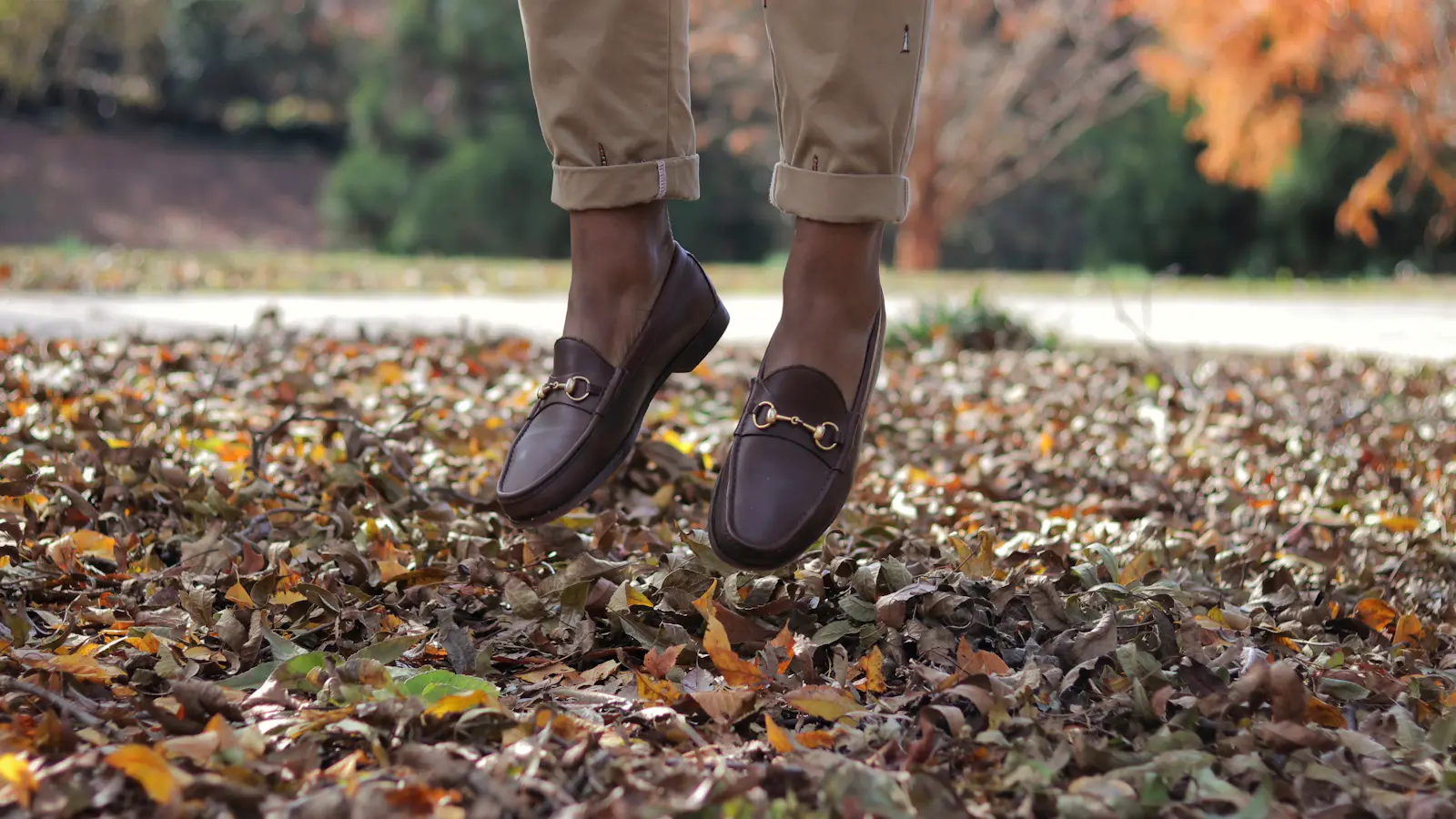
Quick answer: a smart casual dress code asks for clothes that are neat and put together but not formal. Think a blazer or knit with chinos, tailored trousers, dark jeans or a day dress, plus polished shoes. It rules out sportswear and beachwear, and it is less formal than a suit.
“Smart casual dress code” may be the most-used and least-understood line on an invitation or job offer. The words seem to contradict each other, and etiquette guides admit the term is vague. This explainer sets out what dictionaries and etiquette authorities say it means, where it came from, what to wear and what to leave at home, and how it differs from business casual. Every claim is linked to a source listed at the end.
What does a smart casual dress code mean?
Dictionaries agree on the basic idea. The Cambridge Dictionary, which labels the phrase as British, defines smart casual clothing as “neat and stylish, but not too formal, especially when this is the accepted way of dressing for a particular situation, place, or social occasion.” Collins calls it “neat but informal in style,” especially when worn to follow a dress code. Dictionary.com, which also lists the term in its American English entries, says “neat or professional-looking but fairly casual.”
Etiquette guides add the context. Debrett’s, the British etiquette publisher, calls smart casual “this most ambiguous of dress codes.” It says that, in essence, the code is a host asking guests not to arrive in everyday leisure clothes such as trainers, jogging pants, sweatshirts, hoodies, beachwear and flip-flops. In another guide, Debrett’s calls it “by far the most common of all dress codes” and a “catch-all.”
American career advisers describe the same middle ground. MIT’s Career Advising & Professional Development office says smart casual is “more kempt than casual and less flashy than formal,” and calls it one of the most challenging dress codes to pin down.
Where “smart casual” came from
The phrase is older than the modern office dress code. Dictionary.com dates its first recorded use to 1920–25. It became a workplace issue much later, when employers started relaxing the suit-and-tie rule.
- 1920–25: Dictionary.com gives this as the first recorded use of “smart casual.”
- 1966: According to Levi Strauss & Co., the Hawaiian Fashion Guild launched “Aloha Fridays,” encouraging office workers to wear Hawaiian shirts and dresses at the end of the week.
- 1980s: BBC News reported in 2000 that the trend toward leisurewear in the office began in the 1980s in Silicon Valley.
- 1992: Levi Strauss & Co. says its Dockers brand mailed a “Guide To Casual Business Wear” to approximately 25,000 HR managers across the US. The company cites a 1995 Evans Research survey in which nine out of ten companies allowed casual dress at least occasionally, up from about two-thirds in 1992.
- 2000: BBC News reported that Arthur Andersen, which it described as a financial firm, had practically ordered its staff to go “smart casual” every day of the week. The Guardian wrote that year that “dress down Fridays” had “swiftly expanded into complete weeks of smart casual dressing in corporate Britain.”
- 2013: Leaders at the G8 summit at Lough Erne in Northern Ireland were asked to dress smart casual, as The Guardian and BBC News reported.
The Dockers dates and survey figures come from Levi Strauss & Co.’s own account of its history, so treat them as the company’s version of events. The same account notes that Dockers is often credited with inventing Casual Fridays and calls that only “partially” true.
Why the smart casual dress code confuses people
Confusion has followed the term since it entered offices. In its 2000 report on Arthur Andersen, BBC News described reports of bewildered professionals turning up in golfing gear and nightclub clothes. Cary Cooper, then a professor of organisational psychology at the University of Manchester Institute of Science and Technology, told the BBC: “Well, I mean, what is it? Even I don’t know what it really means.” His advice was to use common sense and carry a spare tie.
In 2018 a 26-year-old reader wrote to The Guardian’s Money section after starting his first proper job, asking what smart casual actually means and whether jeans are allowed. Even world leaders have been asked to decode it. At the 2013 G8 summit, the UK’s then chancellor, George Osborne, said on BBC Breakfast: “Basically I am doing what I was asked to do, which is turn up in smart-casual wear.” He added that he had got out his jacket and blue shirt. BBC News noted that every leader at the summit appeared without a tie.
Part of the problem is that the guides don’t fully agree. In 2000, BBC News published a list of what smart casual is not that included jeans and trainers. Today, Debrett’s informal version allows clean, dark, well-fitting jeans and smart trainers, and the University of Massachusetts Amherst’s Isenberg School of Management lists dark, neat jeans and clean sneakers as smart casual. Context decides which reading applies.
What to wear for a smart casual dress code
Debrett’s splits the code into a more formal and a more relaxed version. As of October 2026, its guidance and the US guides cited here point to these building blocks:
- A jacket or knit on top. For the more formal version, Debrett’s recommends a jacket or blazer with an open-necked shirt with a collar, and says ties are generally not necessary. Sweaters are fine when it’s cold. Emily Post’s “dressy casual” list for men includes a seasonal sport coat or blazer with slacks.
- Collared shirts or polished tops. Emily Post lists a dress shirt, casual button-down, open-collar or polo shirt. Debrett’s says a polo or printed shirt beats a collarless T-shirt at the relaxed end.
- Trousers with some structure. Chinos and tailored trousers are Debrett’s first choices, with flannels or needlecord trousers in its more traditional guide.
- Dresses and separates. For women at daytime events, Debrett’s suggests dresses, or skirts and trousers with silk or printed shirts or chic cardigans. A smart day dress with a jacket is its “safe choice” for formal smart casual.
- Polished shoes. Debrett’s suggests loafers, brogues or lace-ups for men, not trainers or sandals, and kitten heels, flats or loafers for women in the daytime.
Evening events can push the look up a notch. Debrett’s says women may choose a more decorative cocktail-style dress, evening-style trousers, statement jewellery and higher heels. Emily Post describes dressy casual as ideal for networking after work, fundraisers and dinner at a nice restaurant. In a dress-code glossary that Peter Post of the Emily Post Institute helped the trade publication Meetings & Conventions put together, smart casual is described as also being called dressy casual or Friday casual.
What not to wear
Debrett’s list of what to leave out includes sportswear and sports shoes, beachwear, flip-flops, hoodies and jogging pants. The BBC’s 2000 list of what smart casual is not also named combat trousers, sandals and golfing gear. Debrett’s also warns women against wearing suits, because they look like business clothes, and says denim should be immaculate. Even at the relaxed end, Debrett’s advises men to change their clothes for the event and make sure everything they wear is laundered and at the smarter end of the spectrum.
Smart casual vs. business casual
The two codes overlap, and the line between them depends on who is writing. The Isenberg School’s dress guide places smart casual as “more relaxed than business casual while still looking intentional and put together,” and suits it to casual networking events, company social outings and workplaces with a more relaxed culture.
Emily Post’s business casual guide is stricter on two common questions. It says jeans are “usually a no” and sneakers are “usually a no-go” for business casual, with exceptions for clean, well-fitted pieces in more casual settings. It also frames business casual as a step down from whatever is normal in a particular workplace, so the same words can mean a jacket in one office and a sweater in another.
The labels also differ by country. In 2000, BBC News described British offices going smart casual as trying to do what Americans call business casual. If an employer gives its own definition, that definition is the one to follow. Emily Post’s advice is to always check and abide by your company’s dress code.
How to read a smart casual invitation
Because the code is so broad, the details matter. Debrett’s offers several clues:
- The invitation itself. A printed invitation suggests a smarter event than a text or email.
- The setting. Town and city events will generally be more formal than those in the country.
- The host. A very traditional host, or one from an older generation, may expect a more formal style.
- Time and season. Debrett’s says smart casual is usually a summer dress code and advises dressing for the occasion, the time of day and the season.
- When in doubt, ask. If you can’t find out what others are wearing, Debrett’s suggests asking the host, and notes that “come as you are” rarely means what it says.
The most consistent advice is to lean smarter. Debrett’s says it is preferable to look over- rather than under-dressed, and that it is easier to dress down an over-smart outfit than to dress up an overly casual one at the last minute. The Isenberg guide agrees: if you’re unsure, go with the more polished option.
The BBC’s 2011 report suggests the code is unlikely to disappear. Claire McCartney of the Chartered Institute of Personnel and Development told the BBC that prescriptive dress codes were becoming increasingly old-fashioned, adding: “there is a wider acknowledgement that you don’t have to wear a suit to be smart.”
How we approach this
Dress codes are conventions, not laws, and their meaning shifts with place and time. For this explainer we relied on dictionaries, established etiquette authorities, university career offices and contemporary news reporting, and we flagged where those sources disagree instead of picking a winner. We did not use photos of real people. You can read how we source and correct stories in our editorial standards, learn more about CelebRelay, browse more fashion explainers in Style, or read our explainer What Is a Nepo Baby? on another everyday term with a contested meaning.
Smart casual dress code FAQ
What is the difference between smart casual and business casual?
The two overlap. The Isenberg School of Management describes smart casual as more relaxed than business casual. Emily Post says jeans and sneakers are usually not business casual, while several smart casual guides allow dark, neat jeans and clean sneakers. An employer’s own definition always comes first.
Are jeans smart casual?
Sometimes. Debrett’s formal smart casual calls for chinos or tailored trousers rather than jeans, but its informal version allows clean, dark, well-fitting jeans. The Isenberg guide also lists dark, neat jeans. Avoid faded, baggy or ripped denim, and pair jeans with a jacket or collared shirt.
Can you wear sneakers with a smart casual dress code?
Only clean, smart ones, and only at the relaxed end. Debrett’s suggests smart trainers or deck shoes for informal smart casual, but loafers, brogues or lace-ups for the formal version. Debrett’s lists sportswear and sports shoes as things to avoid.
Do you need a tie for smart casual?
Usually not. Debrett’s says ties are generally not necessary for smart casual, and Emily Post lists a tie as optional for dressy casual. Debrett’s suggests carrying one just in case, a tip BBC News also reported from organisational psychologist Cary Cooper in 2000.
What should women wear for a smart casual dress code?
Debrett’s suggests a smart day dress with a jacket as a safe choice, or skirts and trousers with silk or printed shirts or cardigans. Emily Post lists a dress, a skirt and dressy top, or nice jeans and a dressy top. Evening events allow more decorative pieces.
Sources
- Cambridge Dictionary, “Smart casual”; Collins English Dictionary, “Smart casual”; Dictionary.com, “Smart casual” (accessed October 2026).
- Debrett’s, “Addressing the Dress Code”, “Events and Dress Codes” and “Deconstructing Dress Codes” (accessed October 2026).
- Emily Post Institute, “Attire Guide: Dress Codes from Casual to White Tie Formal” and “Business Casual 101: Everything You Need to Know”.
- Meetings & Conventions, “What to wear”, with Peter Post of the Emily Post Institute.
- MIT Career Advising & Professional Development, “What is a smart casual dress code?”.
- Isenberg School of Management, University of Massachusetts Amherst, “The Isenberg Guide: Dressing for Success”.
- Levi Strauss & Co., “Dockers® And The Birth of Casual Fridays” (July 7, 2014).
- BBC News, “From white collar to open collar” (January 26, 2000), and “Are work suits on the way out?” (February 11, 2011).
- The Guardian, “City workers cut the ties – for now” (December 1, 2000), and “What does ‘smart casual’ actually mean for men?” (October 27, 2018).
- The Guardian (Press Association), “G8 is smart-casual, says Osborne in defence of dressed-down Cameron” (June 18, 2013), and BBC News, “Tie-less G8: Where are the mandatory necktie areas?” (June 18, 2013).
Featured image: brown leather horsebit loafers and rolled khaki chinos above autumn leaves, photo by ray pace on Unsplash, used under the Unsplash License. It is an illustrative image, not a photo of anyone mentioned in this article.